annotated Bibliography
Mezzino, Davide, et al. “Documenting Italian Architecture of the Second Half of the Twentieth Century.” Contemporary Heritage Lexicon, Springer Nature Switzerland, 2024, pp. 343–347, https://doi.org/10.1007/978-3-031-61245-9_16.
This source is a chapter from a book on Italian architecture focused on documenting and preserivng Italian architecture from the second half of the 20th century. This chapter discusses the creation of digital archives in order to preserve historic architecture emphasizing the importance of these digital tools to enhance and promote the understanding of Italy’s ar`chitectural heritage. The chapter discusses the creation of the “Database of Italian Architecture from 1945 to the Present Day” project by the Italian Ministry of culture and draws from their website as well as various online archives, and project plans of Italian architecture. This source is significant because it highlights the challenges and potential of using digital tools to preserve architectural heritage. I agree with its conclusions that digital platforms offer opportunities to make architectural knowledge accessible. This source aligns with my thesis on exploring cultural richness of Italian cities through architecture, as it supports the idea that historical context and regional identity shape architectural styles.
Urry, John. (1992). The Tourist Gaze “Revisited”. American Behavioral Scientist, 36(2), 172-186. https://doi.org/10.1177/0002764292036002005 (Original work published 1992)
This source is a revised examination of the concept of the “tourist gaze,” proposed by John Urry in 1990 and argues that the tourist gaze is a social and cultural construct that shapes how tourists perceive and interact with places, people, and cultures. The article uses various theoritical frameworks, historical examples, and draws on data from tourism practices to support its argument. This article is important because it examines how tourism is not just a passive activity but a socially constructed act. I agree with its conclusions, specifically that different tourists gazes involve particular consumptions of space. This source adds to my thesis by providing a deeper understanding of how regional identity and cultural perceptions are shaped through tourism and illustrates the idea that food and culture in cities like Florence and Rome are experience though the “gaze” of tourists.
Matracchi, Pietro, and Giorgi, Luca. The Cathedrals of Pisa, Siena and Florence: A Thorough Inspection of the Medieval Construction Techniques. Netherlands, CRC Press, 2021, pp. 160-228
This source focuses on the architectural evolution of the Florence Cathedral (Santa Maria del Fiore) detailing its construction process spanning several centuries. The thesis of this chapter is that the cathedral’s design and construction were shaped by many phases of expansion and adaptation that influenced political and archtectural developments over the centuries reflecting Florence’s political, cultural and religious significance. This source uses historical documents, architectural studies and construction records as evidence. This source is significant because it highlights the complexity and historical context of the Florence Cathedral, showing how it reflects the city’s evolving identity. I agree with its conclusions that the cathedral’s construction was a complex project influenced by both religious and political parties. This source supports my thesis of cultural richness of Italian cities, specifically Florence, by providing an in depth look at the evolution of the cathedral which is central to the city of Florence. It fits into my argument by demonstrating how the cathedral’s design and construction were not just architectural achievements but also tie into Florence’s broader cultural history which I aim to explore in my project.
Birindelli, Pierluca. “Cultural Experiences in Florence and Italy: The Grand Tour Narrative in the 21st Century.” SocietàMutamentoPolitica (Firenze), vol. 10, no. 20, 2020, pp. 191–205, https://doi.org/10.13128/smp-11057.
This article examines how the Grand Tour Narrative, a romanticized view of Italy, still shapes the way foreign tourists, many from North America and Europe, view and experience Florence and Tuscany today. The thesis argues that visitors to these areas engage with Italy through a lens of a 19th century narrative, which often presents a vision of “Italy without Italians” and in this case “Florence without Florentines” focusing on and idealized past rather than the present day Italian life. This sources uses historical references to the Grand Tour, ethnographic observations of tourists and students in Florence and draws on the book and film Under the Tuscan Sun, to show how modern media continues to maintain romantacized myths about Italy. This article is significant because because it emphasizes how engrained a romanticized image of Italy is in global tourism and I agree with its conclusions that the Grand Tour narrative continues to shape foreign tourist’s perception of Italy and overshadows the reality of Italian life. This source contributes to my thesis by highlighting how the cultural identity of Italian cities, particularly Florence is shaped by outside narratives rather than just historical context. It supports my argument by adding an additional perspective on how travels’ expectations shape their experience of Italian cities.
Lupi, Livia. “Brick and Mortar, Paint and Metal: Architecture and Craft in Renaissance Florence and Beyond.” Architectural Histories, vol. 11, no. 1, 2023, https://doi.org/10.16995/ah.9170.This source examines the role of artistry in Renaissance architecture focusing on how the interactions between painting, sculpture, metalwork, and architecture shapes the design practices of certain architects in Italy. The thesis explains that many important architects during the time of the Renaissance were skilled in other forms of media and their practical skills informed their architectural designs. The source uses historical examples from Renaissance Italy, focusing on figures like Filippo Brunelleschi and Andrea Palladio, and draws on architectural records and surving works by these figures as evidence. This article is significant because it challenges the ordinary distinction between artistic disciplines and highlights the collaborative nature of Renaissance architecture. I agree with the article’s conclusions that the blending of different mediums and architectural design was essential to the period’s innovation. This source enhances my thesis by demonstrating how the architectural legacy of cities like Florence was shaped by the intersection of craftsmanship and design, linking art and architecture in the creation of cultural landmarks. It supports my argument by providing historical perspective on how the practical skills of artists influenced the enviornment built around them, emphasizing the intersection between art and architecture is key to appreciating the cultural and historical significance of Italian architecture.
Images
All of the images featured on this website were taken by me during my study abroad program in 2023.
About the Author
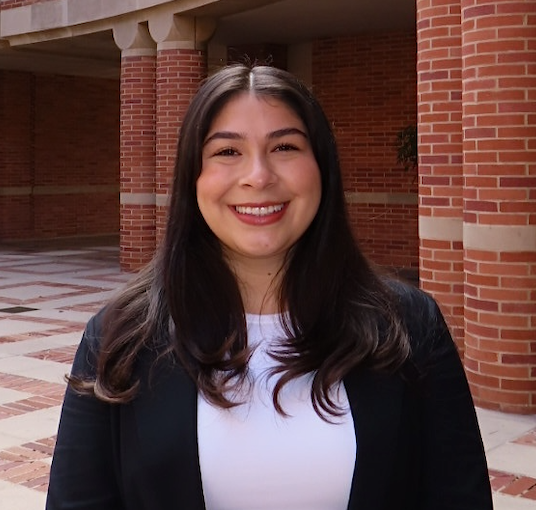
Maria Aguirre is a fourth-year student at UCLA, majoring in International Development Studies and minoring in Digital Humanities. She is passionate about exploring new places and telling stories that highlight culture and identity. This project sparked her interest in using digital tools to reflect on her study abroad experience and to uncover how travel, when approached thoughtfully, can lead to deeper connections with the people and places we encounter.