The Tourist Experience in italy
Cultural Curiosity Through An Immersive Experience
Maria Aguirre
June 9th, 2025
Introduction
How can one get the ultimate experience from their travels? This project aims to uncover the question: How does an understanding of a region and cultural identity deepen the tourist experience when visiting cities abroad such as Florence, Venice, and Rome, particularly for students studying abroad? During my second year of college, I had the opportunity to study abroad in Italy and visit these three cities. While there, I found that my experience was greatly enhanced by immersing myself in the local culture through learning about the history behind the art, the stories told through architecture, and the traditions local to each city. This website is designed for travelers planning trips to Italy, especially students interested in studying abroad. However, it also speaks to anyone who hopes to move beyond passive tourism and connect more deeply with the places they visit. I argue that an understanding of a city’s historical and cultural identity transforms travel from surface level sightseeing into a more intentional and meaningful experience. Through personal reflection on my experiences, historical analysis, and interactive visualizations, this site will highlight how embracing the cultural richness of Florence, Rome, and Venice can enhance the travel experience for any curious visitor.
Florence through history and experience
My experience studying abroad in Florence
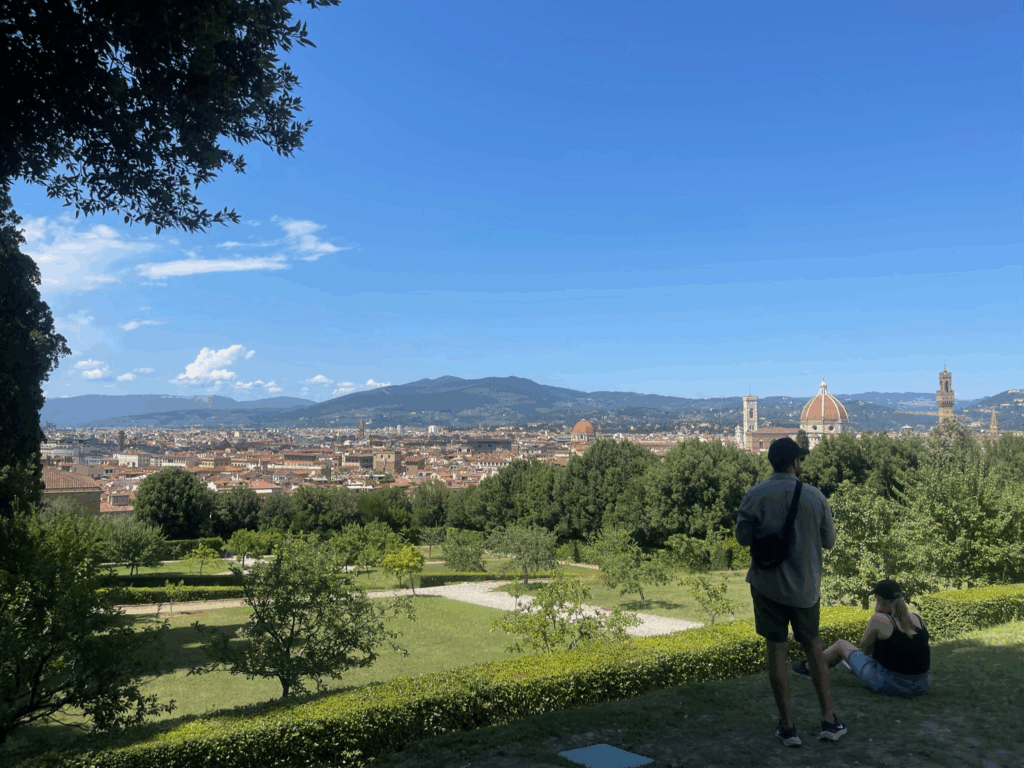
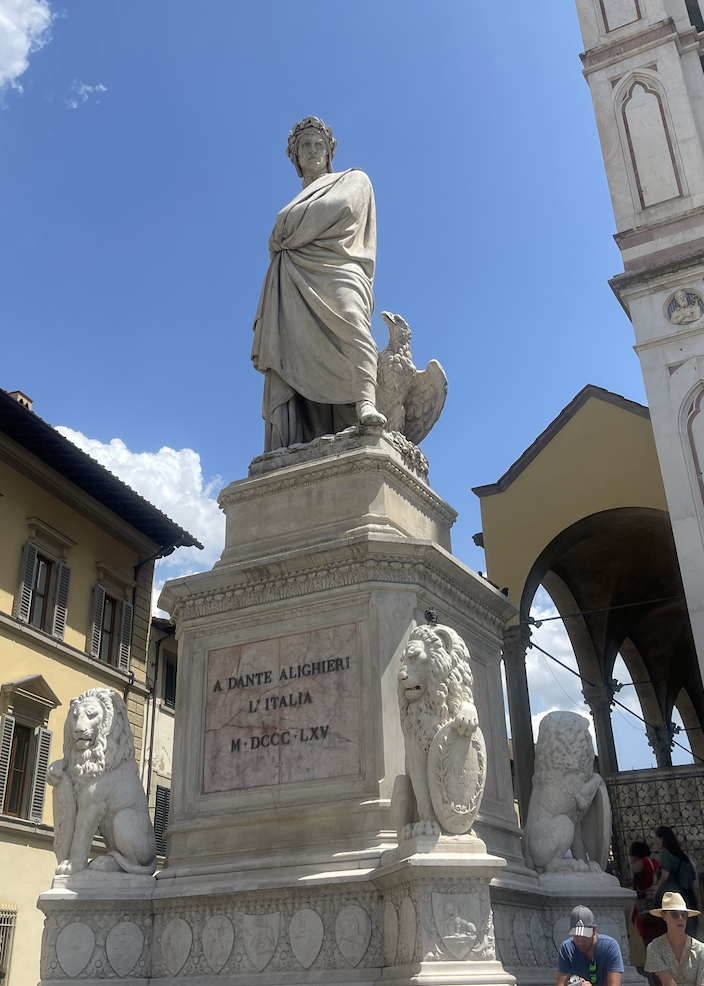
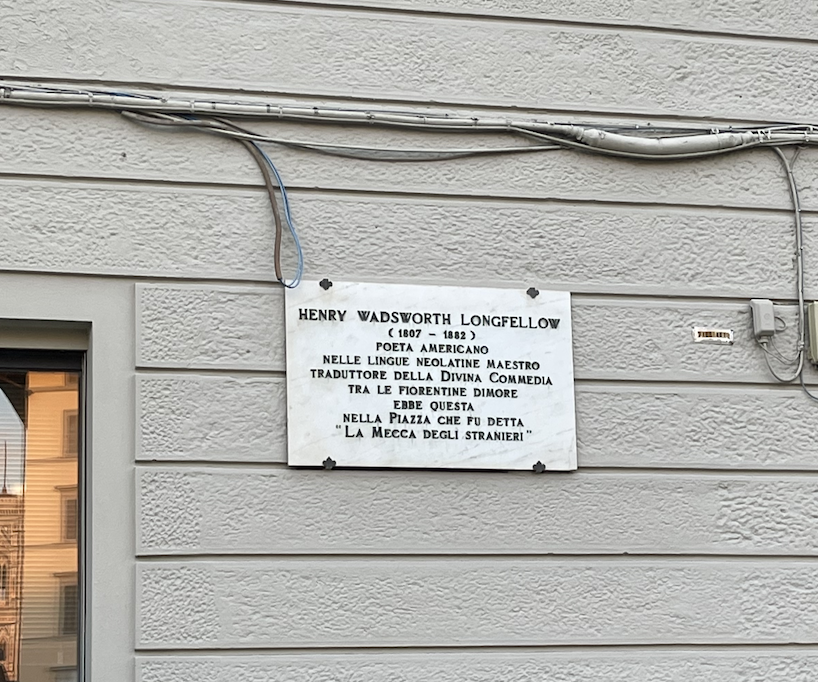
In the summer of 2023, I had the opportunity to study abroad in Florence, Italy, for three weeks through UCLA’s travel program, specifically the American Writers and Artists Abroad course. The program explored literature by both American and Italian authors, including Dante, Nathaniel Hawthorne, and William Dean Howells. What made the experience so immersive was the ability to read about specific places in Florence, Rome, and Venice, and then visit them in person. During my time in Florence, I became acquainted with the local environment, exploring different restaurants, museums, and other cultural spaces unique to the city. With this literary and historical context, I was able to explore these cities with a deeper appreciation for their cultural significance. Studying abroad allowed Italy to feel like a temporary home, and it helped me form a more meaningful connection to each city I visited. It was an experience that enriched both my academic learning and personal growth.
Art and Architecture
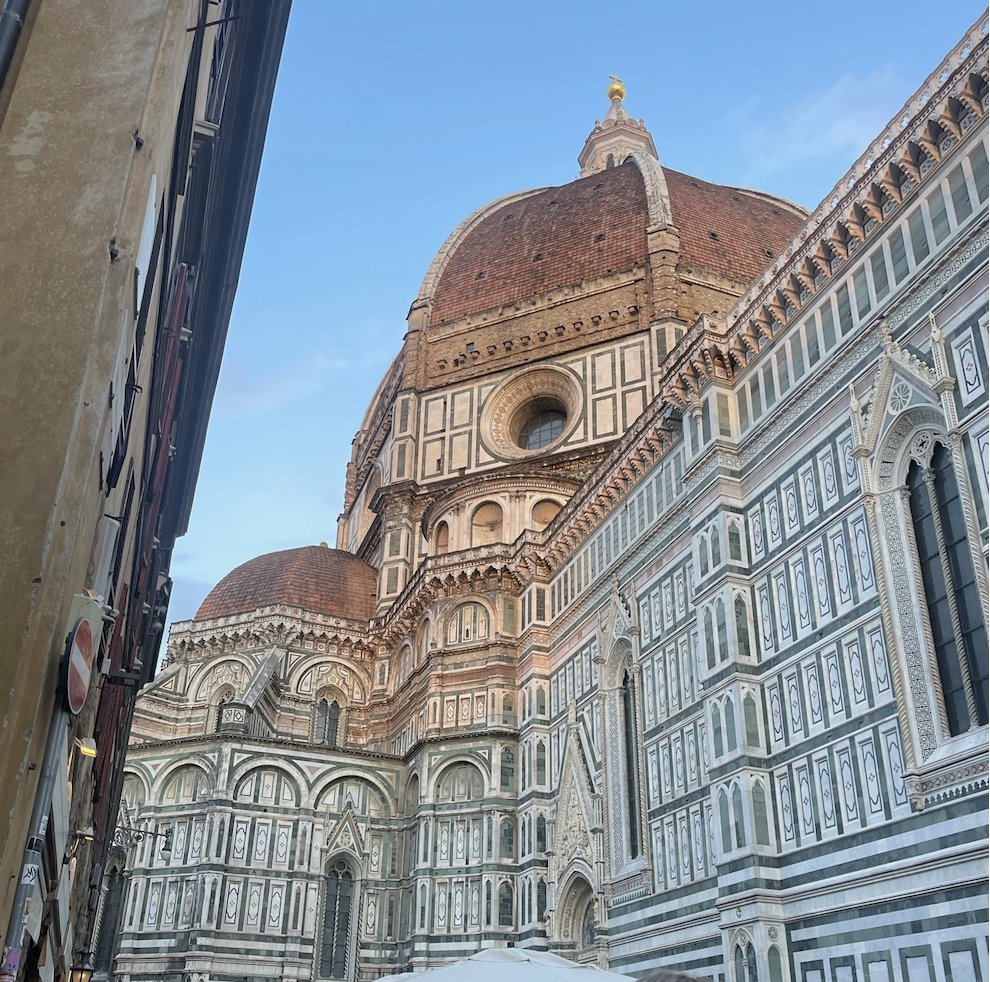
Florence has put itself at the forefront of art and architecture dating back to the renaissance period. During this time, art and architecture in Florence brought together technical skills and artistic ambition. As explained in Brick and Mortar, Paint and Metal, “a variety of craftsmen were employed as architectural designers,” allowing artists to combine skills in order to create works that were both technically innovative and culturally significant, becoming architectural landmarks of the city (Lupi, 5). A prime example of this is the building of the Duomo’s bell tower where Giotto, originally an accomplished Italian painter, was chosen to lead the project. As Lupi explains, “the choice of painters and sculptors [for architectural projects] suggests that patrons sought innovative designers whose ideas were not completely tied to the building process” (Goldthwaite 1982: 354–357 qtd. in Lupi 5). This approach reflects how artistic creativity and interdisciplinary thinking were actively encouraged in Florence, allowing artists to envision buildings as expressive and complex works of art rather than just functional structures.
Today, the Duomo is a central tourist destination in Florence, attracting millions of visitors each year. Tourists from all over the world come to not only admire its magnificence from the outside but also to explore its interior and historic structures. Climbing Giotto’s bell tower offers a unique and immersive experience where visitors can physically engage with the architecture that reflects the vision of the Renaissance in Florence. This continued interest in the Duomo highlights how Renaissance architecture in Florence was designed not just to serve religious functions, but to inspire admiration and thought, which still resonate with audiences today. In doing so, the Duomo serves as a powerful example of how immersive engagement with historical architecture can deepen one’s understanding of cultural identity.
Tourism in Florence
Tourism in Florence is deeply rooted in a romanticized narrative that dates back to the era of the Grand Tour during the 17th century. This narrative continues to shape how foreign visitors experience the city, often through a romanticized fantasy. As Pierluca Birindelli explains in Cultural Experiences in Florence and Italy: The Grand Tour Narrative in the 21st Century, travelers arrive with expectations shaped by media and cultural myths, seeking “Florence without Florentines” (Birindelli, 191). Instead of really connecting with the everyday life of the city, many tourists stick to picture perfect and aesthetic moments. Florence is often seen as a place for “authentic” Italian life and personal reflection, similar to a character Frances in Under the Tuscan Sun, a story that Birindelli notes, “moves along a cultural highway that resonates deeply with the North American/European (and now ‘global’) reader-viewer-traveller (194). This romanticized narrative tends to hide local realities and even residents aware of the expectations imposed by this narrative, “make money out of the romantic narrative” (Birindelli, 196).
Using a word cloud generated through Voyant Tools, I analyzed from the official Italian tourism website to identify terms most commonly associated with Florence. Among the most prominent words, rated from a scale of 100, were “Renaissance,” “Duomo,” “art,” “museum,” “Medici,” “piazza,” and “culture.” These are more than just descriptive terms but instead, they function as symbols that shape collective tourist imagination. They reflect the familiar imagery that draws visitors in: Florence as the heart of the Renaissance, the Duomo as a spiritual and architectural landmark, and the piazzas as a representation of a relaxed Italian lifestyle. The recurring words reveal how many travelers, including students studying abroad, arrive with preconceived notions of what Florence is supposed to offer. However, without thoughtful effort to understand the region’s complex history, evolving culture, and everyday life, these engagements run the possibility of remaining superficial.
Navigating Venice through Canals and culture
Tourism in Venice
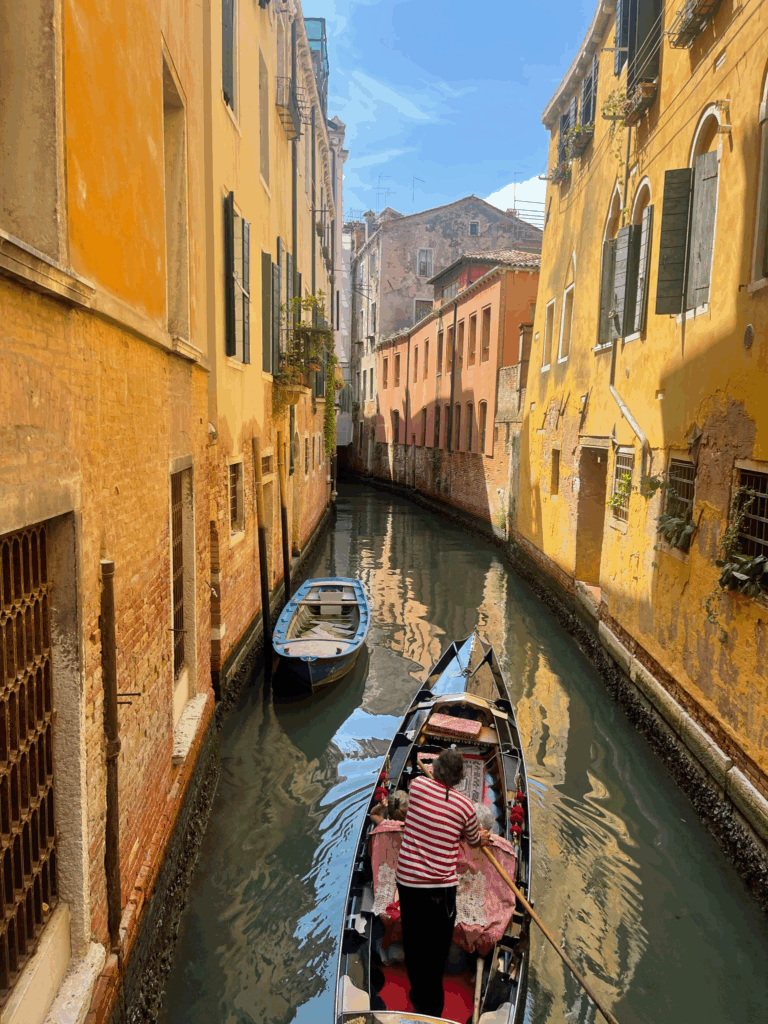
Venice is a city made up of winding canals and historic architecture that offers more than just a visual backdrop. Instead, it reflects the deeper layers of tourism shaped by centuries of idealization and repetition. As John Urry notes in The Tourist Gaze Revisited, “the tourist experience involves something that is visually different from otherwise mundane experience” (173). This visual distinction pulls travelers into a romanticized version of the city, much like Pierlica Birindell describes, where surface appearance is prioritized over authenticity. However, reducing Venice to its aesthetic charm risks turning into a visual backdrop rather than a living city with complex cultural, environmental, and social realities. To truly engage with Venice, travelers must also confront the realities that are left out of this romanticized frame such as rising waters, and the displacement of local communities. By understanding the regional and cultural identities that shape cities like Venice, visitors can move beyond passive observation and create a deeper, more intentional connection with the city and its people.
Capturing the city in words
Using Voyant to analyze Italy’s national tourism page with an emphasis on Venice, the filtered nature of the city becomes clear. On a scale of 100, key terms such as “art,” “lagoon,” “bridge,” “biennale,” and “beautiful” emphasize Venice’s visual and cultural appeal which shape it as a site of beauty and aesthetics to visitors. Words like “discover,” “visit,” “historic,” suggest movement and curiosity, yet they remain tied to a narrative that promotes exploration through exhibition. Since this language comes from Italy’s official tourism platform, it reflects how the city is positioned for international admiration and consumption. While the page invites travelers to learn more about Venice, the responsibility ultimately falls on the visitor to see beyond the curated narrative of the city and meaningfully engage with the place, culture, and be present with its every-day realities.
Architecture, culture, and tourism in Rome
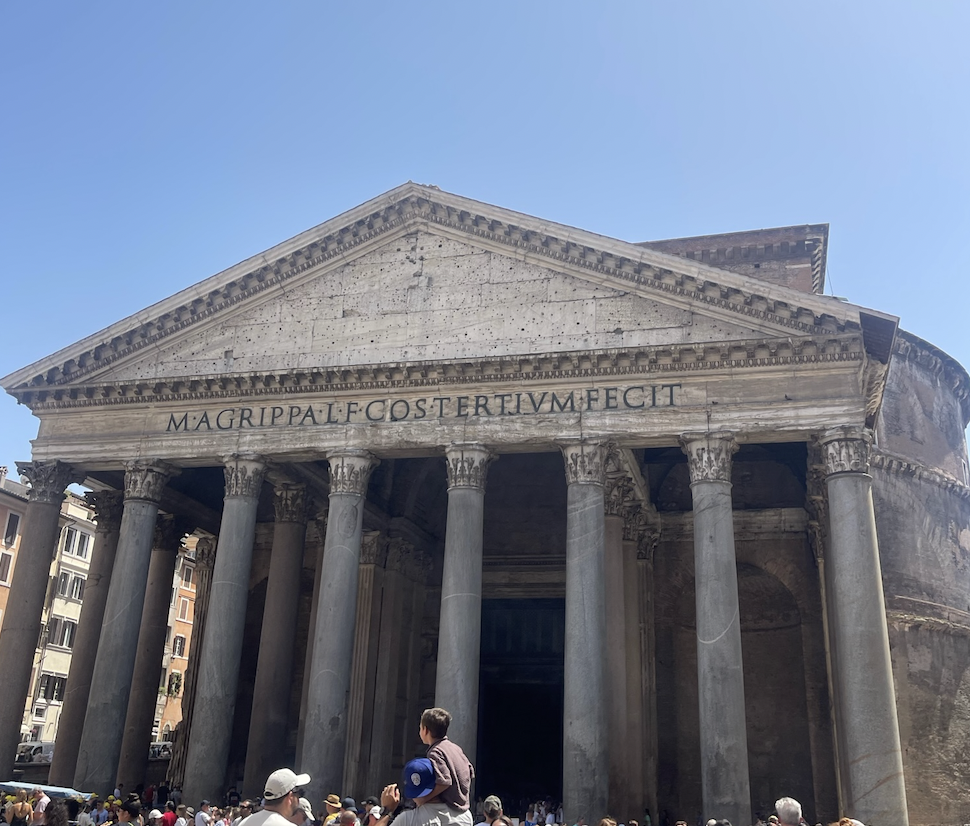
Italy’s architectural history is a testament to centuries of layered cultural expression and continuous iteration. Many famous buildings have stood for generations, evolving over time through renovations and reinterpretations. In The Cathedrals of Pisa, Siena and Florence: A Thorough Inspection of the Medieval Construction Technique, Pietro Matracchi and Luca Giorgi explain that “the design of the new building… was continuously adapted, even with extensive changes, and only reached a first conclusion one and a half centuries later with the construction of the lantern of the dome [of Florence], but it was continuously altered in subsequent centuries until assuming its current form at the end of the 19th century” (160). Although Matracchi and Giorgi are referring to the Florence Cathedral, this process of architectural layering is mirrored in Rome, where landmarks such as the Pantheon and St. Peter’s Basilica have also undergone multiple phases of transformation. When tourists visit these central sites in Rome, they are not simply admiring static monuments—they are engaging with evolving values, aesthetic sensibilities, and historical narratives embedded within the architecture, which deepens the cultural significance of their visit.
Today, Italy’s cultural institutions are increasingly working to preserve and promote architecture dating back to the 20th century as part of the country’s broader heritage.This effort extends to cities like Rome, reframing tourism to include not only ancient ruins and Renaissance landmarks but also more modern architecture. In Documenting Italian Architecture of the Second Half of the Twentieth Century, Davide Mezzino and Alberto Coppo note that digital tools can enhance “the dissemination of knowledge about the Italian architectural heritage of the last seventy years and facilitate the understanding of this dense and complex historical period” (351). This approach broadens how tourists engage with the city, encouraging them to explore different structures that reflect Italy’s post war identity, urban growth, and evolving architectural design. In doing so, Rome’s architectural narrative moves beyond a classical image to one that includes more innovation and becoming more comprehensive. This expanded view invites a deeper, more nuanced appreciation of the city’s architectural identity in the present day for tourists.
A word-based snapshot on rome
In a final word cloud, on a scale of 100 words used to describe Rome from Italy’s national tourism website, words like “museum,” “basilica,” “fountain,” “monuments” appear as some of the most prominent key words associated with the city. This visualization highlights the focal point of architectural landmarks in shaping the tourist experience of Rome and illustrates how the city is promoted as a site of beauty and cultural legacy. These terms evoke famous structures such as the Vatican Museums, St. Peter’s Basilica, the Trevi Fountain, and the Colosseum. These places not only represent Rome’s historical and artistic significance but also serve as symbolic connections of its identity.
The Tourist Gaze in Italy
Tourism throughout the years
This timeline explores the historical development of American tourism and study abroad programs in Italy, highlighting how political, economic, and cultural factors have influenced travel experiences since the 1950s. It begins with the rise of American tourism, followed by the growth of study abroad programs such as UCEAP and AACUPI, which still continue to offer students programs with opportunities for cultural immersion today. The timeline also follows disruptions throughout history hindering travel, including The Great Recession and the COVID-19 Pandemic. The timeline ends with a look at the present, where tourism and travel in Italy is reemerging with events such as the 2025 Catholic Jubilee. Overall, the timeline offers a broader context for understanding how tourism in Italy is not just about leisure but also about evolving international relationships, educational exchange, and cultural engagement.
Mapping italian Tourism
This is an immersive map made on Google Earth that highlights important places to Florence, Venice, and Rome. Each location has three points that are main tourist attractions and central locations known in each city. In Florence, the Cathedral of Santa Maria del Fiore (Duomo) is a central point to Florence, offering tourists an opportunity to explore its deep and rich history. During my time abroad, I used the Duomo as a reference point to navigate around the city, which helped me form a closer connection to Florence and become more familiar with its layout. The Uffizi Galleries, home to masterpieces by Sandro Botticelli and Leonardo da Vinci, offer visitors a window into the legacy of Italian Renaissance art. The third point in Florence is the Ponte Vecchio (Old Bridge) that spans through the Arno River, linking two sides of the city inviting exploration among visitors.
In Venice, the Grand Canal serves as the city’s main “road” with gondolas and water taxiboats transporting visitors throughout the city. The Ponte di Rialto is the oldest bridge on the canal that many cross under and is both an architectural landmark to the city but also a central marketplace. One of the most famous squares is Piazza San Marco that serves as the heart of the city, allowing people to come together and socialize.
In Rome, the Colosseum stands as a powerful symbol of Roman engineering and architecture, drawing millions of tourists each year, and reflecting the rich history of the Roman Empire. The Vatican Museums house centuries of art and religious history allowing visitors to experience the rich history of Catholicism. Lastly, the Trevi Fountain invites visitors to make wishes and throw coins into the fountain, all while admiring its statues. Together, these sites offer a rich and immersive experience, making this map not only a guide to famous landmarks but also a reflection of the layered cultural narratives that define Italy.
Conclusion: Embracing italy through Culture
Throughout my time in Italy, I learned that the most meaningful travel experiences come from not just seeing famous landmarks, but instead from understanding the cultural and historical contexts that shape them. By learning the history behind the Duomo in Florence, the canals in Venice and the architecture in Rome, I gained a deeper appreciation for each city’s identity and cultural context. Although my project focuses on these three cities in particular, the overall takeaway is that all travelers benefit from immersing themselves in the places they visit. Understanding a city’s history, culture, and identity fosters more respect for the communities local to those areas. My project aims to highlight the importance of reflection, learning, and cultural curiosity to guide a meaningful travel experience.
To fellow travelers, especially students studying abroad, I encourage moving beyond passive sightseeing, instead, learn about the places you plan on visiting, talk to locals, and reflect on the histories within the spaces you walk through. Studying abroad with the goal of academic growth is also an opportunity to learn beyond the classroom through cultural immersion, and personal exploration within cities. By embracing the histories, and traditions of each city, students and all travelers can deepen their connections to the places they visit, leaving them with a more well rounded understanding of the world around them.